

Featured
ULEZ ✓Swiss VansBridgend
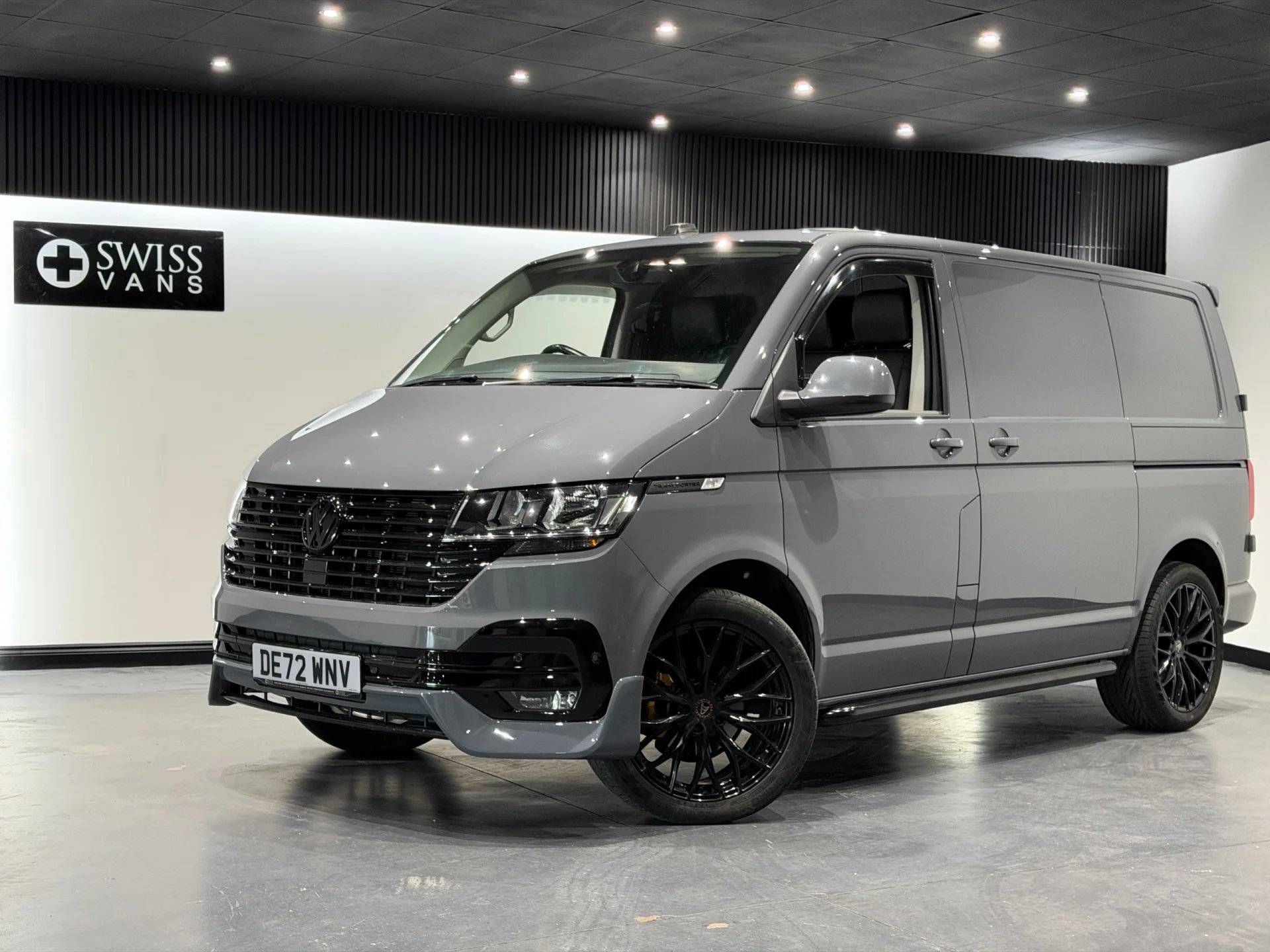
Volkswagen Transporter Kombi SWB 150 DSG T32 Highline TDI Semi-Auto
2024 · 39,539 mi · Diesel
T32 Highline TDI Semi-Auto
£34,995+ VAT
Auto
Volkswagen
Pick a model for the buying guide and the Volkswagen vans listed now, or filter all Volkswagen stock on the Volkswagen vans search.
Swiss VansBridgend
2024 · 39,539 mi · Diesel
T32 Highline TDI Semi-Auto
Swiss VansBridgend
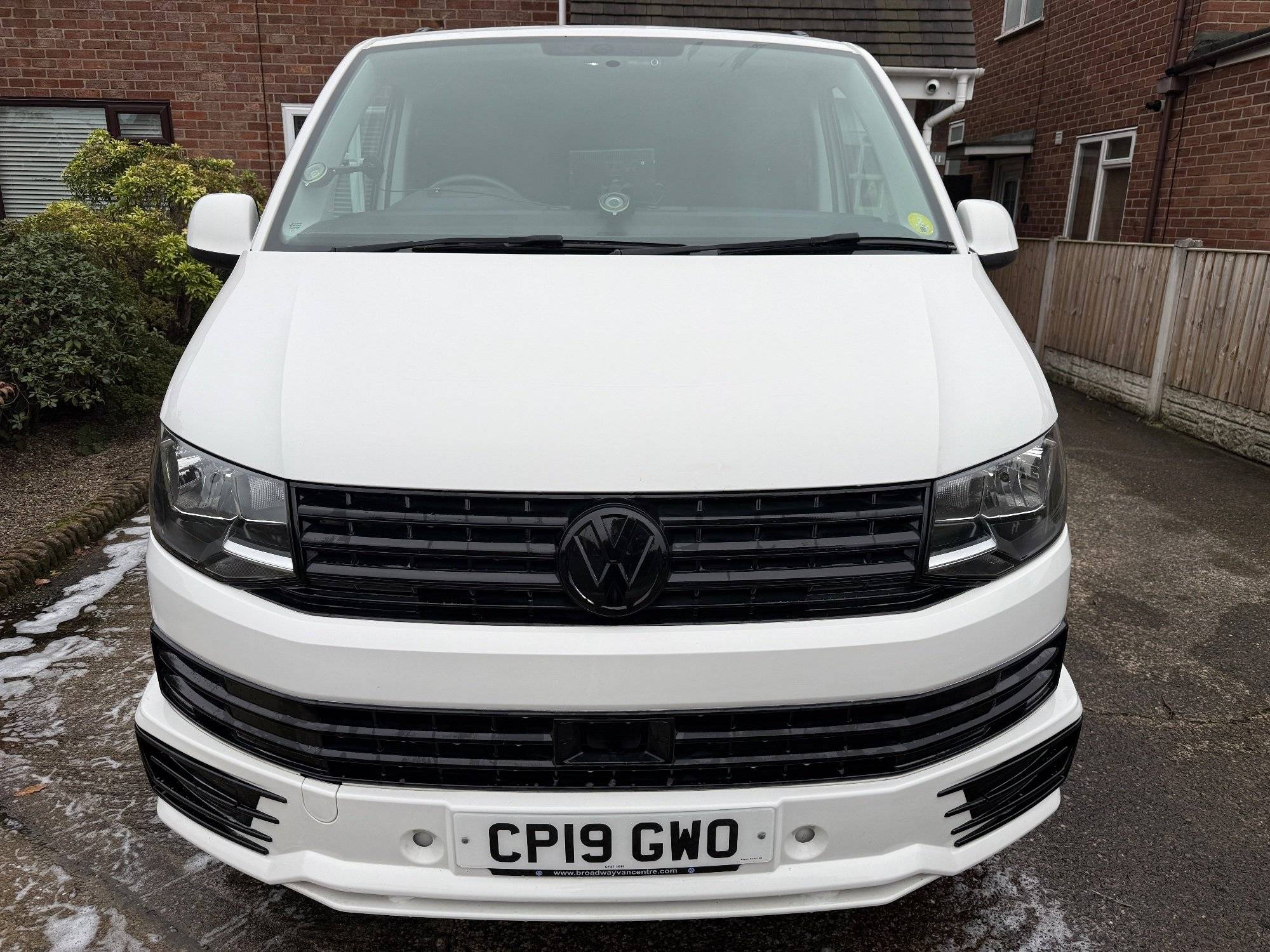
2022 · 35,901 mi · Diesel
T28 Highline TDI
Volkswagen commercial vehicles hold a distinctive position in the UK van market. Known for solid build quality, class-leading cab ergonomics, and stronger residual values than most competitors, models sporting the VW badge are viewed by many tradespeople as a benchmark. Whether navigating tight urban residential streets in a compact van or hauling heavy site materials up a motorway slip road, the Volkswagen range delivers a car-like driving experience paired with hard-wearing commercial utility.
Buying a used Volkswagen requires an understanding of how these vehicles age under commercial workloads. While the brand enjoys a reputation for premium engineering, used examples are not immune to mechanical fatigue. Engine variations, dual-clutch transmission maintenance, and emissions system upkeep directly affect ongoing reliability. Knowing the differences between generations—such as the transition from pump-duse to common-rail diesel engines, or the platform shift from the Transporter T5.1 to the T6 and T6.1—allows you to secure a reliable work vehicle without overspending.
Vansales is an independent online marketplace and information portal designed to help buyers research and compare commercial vehicles. Vansales does not sell vehicles directly, nor does it operate as a commercial lender. This guide provides objective technical information to help you evaluate used Volkswagen vans on the UK market, understand real-world running costs, and identify the correct specification for your trade.
The Volkswagen commercial line-up covers three primary weight classes alongside specialised all-wheel-drive pick-ups. Each model addresses different payload, volume, and operational requirements across UK trade sectors.
Investing in a commercial vehicle involves matching cargo dynamics, payload limits, and daily mileage to the specific demands of your trade. UK trades consistently favour used Volkswagen models for defined practical reasons.
Electricians, Alarm Engineers, and HVAC Technicians frequently opt for the Caddy Maxi or Transporter T28 SWB. These trades carry expensive, high-density inventory—cable drums, testing equipment, and components—that require organized internal racking rather than immense volumetric capacity. The car-like footprint of the Caddy allows easy access to domestic driveways and multi-storey city car parks, while offering sufficient payload for modular steel shelving units.
Carpenters, Joiners, and Kitchen Fitters gravitate towards the Transporter LWB or the Crafter Medium Wheelbase (MWB). A crucial metric for these trades is the ability to slide standard eight-by-four-foot sheet materials flat on the load floor between the wheel arches or vertically against a bulkhead. While an eight-by-four sheet can sit diagonally in a Transporter SWB, an LWB allows sheets to lie flat with the rear doors closed, leaving ample room for site saws, chop saws, and toolboxes.
Plumbers and Heating Engineers value the payload capacity of the T30 or T32 Transporter. Boilers, unvented cylinders, brass fittings, and heavy copper tube rapidly accumulate weight. A lower-rated T26 can easily become overloaded when carrying water heaters and tools, leading to suspension strain and legal compliance issues on UK roads. Plumbers who transport three-metre lengths of copper tube internally generally choose the LWB Transporter or equip a roof rack system with a secure pipe tube.
General Builders, Groundworkers, and Civil Contractors typically require either a Crafter CR35 or an all-wheel-drive Transporter 4Motion. Heavy payloads, mixed-terrain access on unfinished housing developments, and the frequent need to tow plant trailers loaded with mini-diggers make rear-wheel-drive or all-wheel-drive configurations essential. The Crafter CR35 provides the structural resilience needed to absorb heavy palletised aggregate and timber loads without sagging.
When inspecting any used Volkswagen van on site, look past superficial valeting and conduct a rigorous mechanical assessment. Commercial vans often mask heavy wear behind durable cabin plastics.
Every vehicle platform carries known engineering vulnerabilities. Knowing these common failure points gives you leverage during negotiations and protects you from unforeseen garage bills.
On third-generation Caddys fitted with the older 1.6-litre TDI engine (EA189 engine family), piezoelectric injector failure is a documented issue. The Continental/Siemens injectors used in these engines can suffer internal electrical shorts without warning, cutting engine power instantly. Most surviving examples have had these replaced with updated units, but service records should be cross-referenced carefully.
On fourth and fifth-generation Caddys using the 2.0-litre TDI (EA288), pay attention to the cooling system. The electronically actuated water pump features an internal sliding collar designed to bring the engine up to temperature faster; this collar frequently seizes in place, causing rapid engine overheating under load. Furthermore, rear leaf spring shackle bushes are prone to premature wear, causing knocking noises over road imperfections.
The most notorious engine issue in the used Transporter market involves the 180PS BiTDI twin-turbo diesel engine fitted to the T5.1 (CFCA engine code). In this specific unit, the factory-installed exhaust gas recirculation (EGR) cooler had aluminium cooling fins that degraded internally. Acidic exhaust gas deposits corroded the metal, flaking microscopic aluminium powder into the engine cylinders. This powder acted as an abrasive paste, scouring the cylinder bores and causing terminal oil consumption, often requiring an entirely new engine block. Only vehicles fitted with the revised revision 'D' EGR cooler are protected from this failure.
On T6 models fitted with the newer single and twin-turbo Euro 6 engines, look out for cracked EGR pipes and premature dual-mass flywheel (DMF) wear. A failing DMF produces a metallic rattling noise at idle that disappears when you depress the clutch pedal. Front suspension drop links, top strut mounts, and lower control arm bushes also have a tough life, particularly on vans running at maximum gross weight or fitted with aftermarket alloy wheels.
On first-generation Crafters (pre-2017), body corrosion is a major consideration. Unlike the passenger car range, these early bodies were not fully galvanised, meaning wheel arches, rear door bottoms, and windscreen scuttles are prone to bubbling rust. The two-piece propshafts also suffer from worn centre support bearings, generating a noticeable cabin vibration between thirty and fifty miles per hour.
On second-generation Crafters (2017 onwards), common issues switch to electrical sensors and chassis running gear. Front top strut mounts can groan and creak under low-speed manoeuvring. Wiring loom chafing around the steering column and lower engine bay has also caused intermittent electrical gremlins on early production models. Ensure the clutch slave cylinder on manual gearboxes is not leaking fluid into the bellhousing, indicated by a low or spongy clutch pedal bite point.
Used van prices vary significantly based on mileage, operational history, mechanical condition, and optional equipment. Use these broad price tiers as a roadmap when searching the classifieds.
Vehicles in this bracket are older workhorses, typically consisting of well-used third-generation Caddys, high-mileage T5 Transporters, or first-generation Crafters. Expect odometers reading well over one hundred and fifty thousand miles. Cosmetic scrapes, minor cab wear, and partial service histories are standard. In this bracket, your budget should prioritize structural chassis health, a fresh MOT with no structural advisories, and evidence of recent timing belt replacements over exterior aesthetics.
This bracket opens up cleaner, well-maintained commercial vehicles. You will find fourth-generation Caddys, T5.1 Transporters, and early Euro 6 T6 models with moderate mileages (between eighty thousand and one hundred and thirty thousand miles). Vans in this price band often come from corporate fleet backgrounds or established trades with comprehensive maintenance records. Ensure that any vehicle in this bracket has full documentation for clutch and transmission upkeep.
This is the core market for modern, reliable work vans. Here you will find late-model Caddy 4s, high-specification Caddy 5s, tidy T6 Transporters, and modern second-generation Crafters. Crucially, vehicles in this band are virtually all Euro 6 compliant, making them exempt from daily emission charges in Clean Air Zones across the UK and the London Ultra Low Emission Zone (ULEZ). Vehicles should boast low-to-moderate mileages, full service books, pristine cargo areas, and factory specifications such as air conditioning, cruise control, and rear parking sensors.
At the top end of the used market sit late-plate T6.1 Transporters, low-mileage second-generation Crafters, and high-trim Highline or Sportline models. This bracket includes factory 4Motion all-wheel-drive vans, factory Kombi passenger vans, and vehicles equipped with high-output 204PS engines paired with DSG gearboxes. Vehicles in this class will typically have less than forty thousand miles, remaining manufacturer warranty periods, and minimal cosmetic wear.
Acquiring a commercial vehicle requires balancing capital flow, monthly cash commitments, and tax efficiency. Tradespeople generally evaluate three primary funding routes when acquiring a used Volkswagen van.
Hire Purchase (HP) is a straightforward route to ownership. You typically pay an initial deposit (which can often be the full VAT amount if purchasing from a VAT-registered dealership), followed by fixed monthly payments spread across twelve to sixty months. Once the final payment and option-to-purchase fee are cleared, your business owns the vehicle outright. This route suits trades who intend to keep their van for five years or more, run high annual mileages, or customize the vehicle heavily with internal racking, bespoke shelving, and external trade livery.
Finance Lease is particularly popular among VAT-registered limited companies and partnerships. With finance lease, you retain the vehicle for an agreed term while paying fixed monthly rentals. The agreement can include a balloon payment at the end, structured against the expected residual value of the van. While you do not automatically own the vehicle at the end of the term, you can sell it to an independent third party on behalf of the finance company, retaining the vast majority of the equity generated. This protects working capital while allowing you to operate modern, low-emission machinery.
Business Contract Hire functions as a long-term rental package. You pay an advance rental followed by regular monthly payments, handing the keys back at the conclusion of the term without any residual value risk. While contract hire is predominantly used for brand-new commercial vehicles, some suppliers offer terms on younger used models. You can explore modern vehicle supply routes through van lease deals to evaluate whether structured leasing fits your operating budget better than buying outright.
For a detailed breakdown of agreements, tax implications, and how funding structures apply to your business circumstances, read our comprehensive overview of commercial van finance options.
Disclaimer: Vansales is an independent online vehicle marketplace and informational website. Vansales is not a lender, broker, or financial intermediary and does not provide financial advice, arrange vehicle finance, or sell motor vehicles directly. All vehicle finance is subject to status, formal application, and approval from authorized third-party financial institutions. Always consult an accountant or independent financial advisor before entering into commercial credit agreements.