Buying used long wheelbase vans
Understanding Long Wheelbase Vans
A long wheelbase van, commonly designated as an L3 or L4 variant depending on the manufacturer, is designed to maximise usable cargo volume without crossing the threshold into heavy goods vehicle licensing. In the UK, these commercial vehicles represent the largest enclosed panel vans you can legally drive on a standard Category B driving licence, provided the vehicle does not exceed the standard gross vehicle weight ceiling of three and a half tonnes.
Where a short or medium wheelbase vehicle compromises on internal load length to remain nimble in tight residential streets, a long wheelbase chassis extends the distance between the front and rear axles. This engineering choice pushes the rear axle further back, often accompanied by an extended rear body overhang on extra-long variants. The result is an internal load floor that typically measures between three and a half metres to well over four metres in length, coupled with internal cargo volumes that range from eleven cubic metres to more than fifteen cubic metres when paired with high roof configurations.
Before committing to an extended chassis, you must understand the fundamental trade-off between volume and payload capacity. Because an elongated steel body, additional chassis bracing, and longer running gear add substantial unladen kerb weight to the vehicle, the remaining legal payload is reduced. A standard panel van operating under the three-and-a-half-tonne gross vehicle weight limit must account for its own weight, the driver, fuel, tools, and cargo. If you carry dense, heavy items such as sand, aggregate, or wet mortar, an extended chassis may cause you to run over your legal axle weight limits despite having empty space inside. Conversely, if your work demands carrying bulky, volumetric items that take up vast amounts of room without excessive mass, searching for quality used vans in this size category is the most efficient choice for your fleet.
Core Advantages and Trade Applications
Operating an extended commercial vehicle provides specific operational advantages that smaller vans simply cannot match. For many commercial operators, the primary benefit is the ability to transport standard materials internally rather than relying on external roof racks or towing trailers, which increase fuel consumption, create aerodynamic drag, and present security risks when parked unattended on work sites.
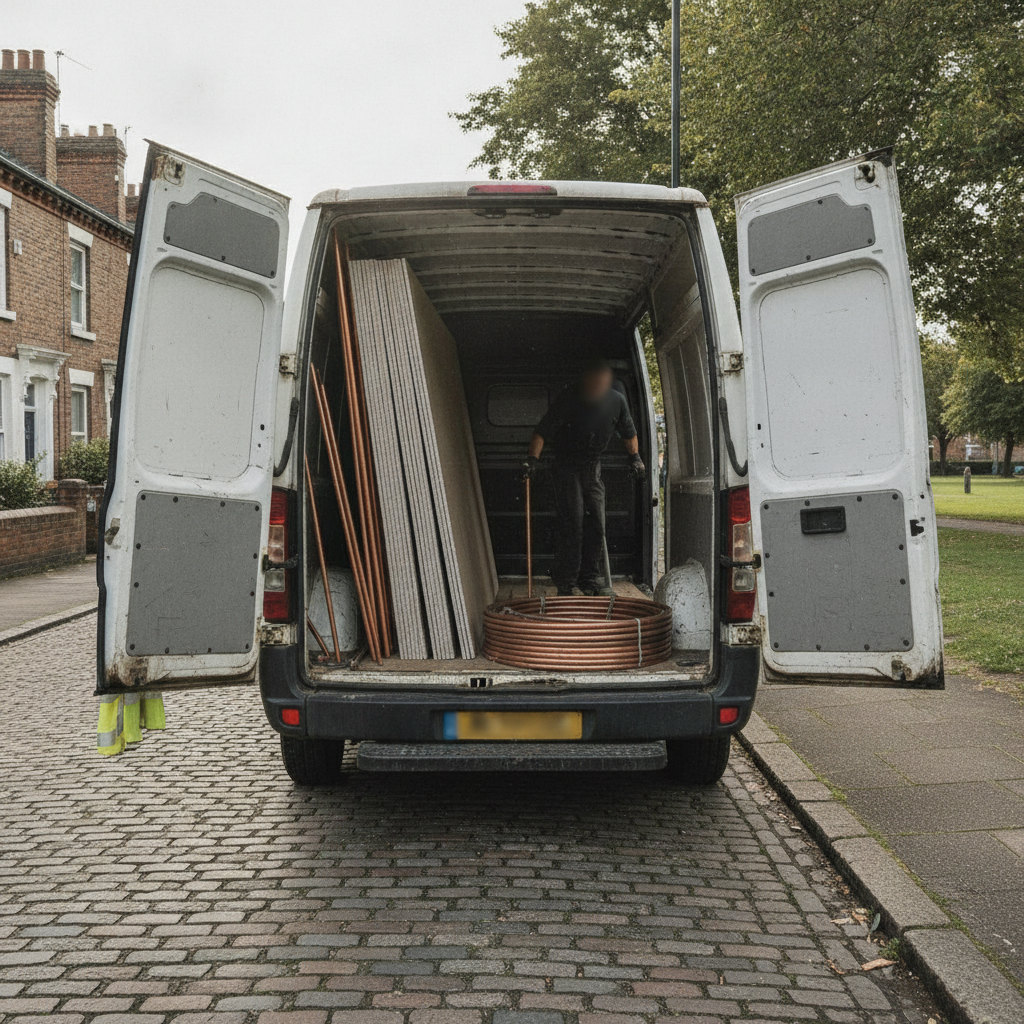
A standard eight-by-four-foot sheet of plywood, plasterboard, or insulation can be loaded completely flat on the floor between the wheel arches in several popular chassis models, or stood vertically along the internal bulkhead without bending or snagging the rear door frame. Plumbers and electrical contractors can carry continuous three-metre conduit lengths, four-metre drainage pipes, and full packs of timber framing with the rear cargo doors securely latched. Furthermore, high roof options allow personnel of average height to walk upright through the rear cargo area, transforming the vehicle from a simple delivery carrier into a mobile workshop equipped with racking, tool chests, and workbench space.
The trades and sectors that rely most heavily on this chassis configuration include:
- Multi-Drop Parcel Couriers and Logistics Contractors: Couriers require high-cube capacity to stack dozens of parcel cages, totes, and irregular packages on multi-drop delivery routes without running out of cubic volume halfway through a working shift.
- Joiners, Carpenters, and Shopfitters: These trades transport fully assembled cabinetry, commercial store displays, internal fire doors, and long architectural mouldings that must remain dry, clean, and unblemished during transit.
- Dryliners, Plasterers, and General Builders: Construction contractors require the space to carry bulk quantities of sheet materials, multi-finish plaster bags, cement mixers, and site generators simultaneously.
- Motorcycle Transport and Plant Recovery: The internal load length allows two or three full-sized motorcycles, quad bikes, or compact plant machinery to be winched aboard and secured to heavy-duty floor-mounted load rings.
- Campervan Converters: Professional and amateur builders heavily favour this platform because the generous floor plan accommodates a fixed rear bed, dedicated shower cubicle, galley kitchen, and dinette seating area without feeling cramped.
Top Makes and Models in the UK Market
The UK used marketplace offers several proven nameplates, each presenting unique engineering characteristics, drivetrain layouts, and commercial advantages.
Ford Transit L3 and L4
The Ford Transit remains a dominant sight on UK roads for practical reasons: an extensive commercial dealer network, readily available aftermarket components, and widespread mechanic familiarity. Modern used iterations are powered by the two-litre EcoBlue diesel engine. Ford offers the Transit in front-wheel drive, rear-wheel drive, and all-wheel drive configurations. Front-wheel drive versions provide a lower step-in height and a marginal payload advantage due to the absence of a propshaft and rear differential. Rear-wheel drive models, particularly those specified with dual rear wheels, are better suited to heavy towing and continuous heavy-axle operations. When inspecting an EcoBlue unit, scrutinise the service record for regular oil changes, as this engine uses a wet timing belt system that deteriorates rapidly if incorrect engine oil grades are used or service intervals are ignored.
Mercedes-Benz Sprinter
The Mercedes-Benz Sprinter is celebrated for long-distance highway comfort, robust mechanicals, and strong residual values. Historically rear-wheel drive, post-2018 models also introduced front-wheel drive options to lower cargo load sills and increase internal payload. Older models utilise the proven two-point-one-litre OM651 four-cylinder engine, while later versions adopt the refined two-litre OM654 aluminium unit. Sprinters are renowned for high mileage capability, with fleet examples regularly passing hundreds of thousands of miles when maintained properly. However, electronic components, complex exhaust aftertreatment systems, and potential rust around ungalvanised chassis contact points on heavily abused examples require careful examination prior to purchase.
Volkswagen Crafter and MAN TGE
Since Volkswagen separated from the Mercedes manufacturing joint venture, the standalone Crafter—and its mechanically identical sibling, the MAN TGE—has earned acclaim for modern ergonomics and driver assistance technology. Powered by a two-litre TDI engine available with single or bi-turbo induction, the Crafter provides an exceptionally car-like driving position, sharp steering, and supportive seating that reduces driver fatigue on long motorway hauls. The cargo area features clean, vertical sidewalls that make fitting bespoke internal racking exceptionally straightforward. Ensure that any twin-turbo model you view has a full maintenance log showing consistent cooling system maintenance and timely timing belt replacements.
The Stellantis Platform: Citroën Relay, Peugeot Boxer, and Fiat Ducato
The shared platform comprising the Citroën Relay, Peugeot Boxer, and Fiat Ducato offers the widest internal cargo width in the three-and-a-half-tonne panel van sector. Measuring over one point eight metres between the internal side panels and more than one point four metres between the wheel arches, this platform easily accommodates wide freight and sideways-mounted campervan beds. Furthermore, their front-wheel-drive configuration and lightweight chassis construction mean these vans often deliver the highest legal payloads among all long wheelbase vans. The Relay and Boxer typically employ BlueHDi engines, while the Ducato uses Fiat's own MultiJet engines. While interior cabin plastics and switchgear feel more utilitarian and basic than those found in the Volkswagen or Mercedes alternatives, their sheer carrying capacity makes them popular with builders and budget-conscious fleet operators.
Renault Master, Nissan NV400, and Vauxhall Movano
Prior to Vauxhall joining the Stellantis group, the Movano shared its underpinnings with the Renault Master and Nissan NV400. Powered by a dependable two-point-three-litre dCi diesel engine, these vehicles serve as robust, no-nonsense commercial workhorses. They are commonly available in front-wheel and rear-wheel drive, with the latter offering twin-wheel heavy-duty towing options. They tend to command lower purchase prices on the used market than equivalent Transits or Sprinters, representing practical value for independent tradespeople who want maximum internal square footage without paying a brand premium.
Key Inspection Points When Buying Used
A thorough pre-purchase mechanical and structural inspection is essential when evaluating used long wheelbase vans. The sheer dimensions and commercial demands placed on these vehicles make them susceptible to specific operational wear and structural damage.
Chassis Rails, Sills, and Long Body Panels
Extended panel vans possess large, vulnerable surface areas that frequently sustain damage in congested urban loading bays, narrow side streets, and tight yard entrances. Walk the full perimeter of the van and sight down the flanks from front to rear. Look for rippling panels, uneven panel gaps, or heavy filler repairs that could indicate an unrecorded side-impact collision. Inspect the bottom body sills carefully; these are frequently crushed or gouged by forklift operators loading heavy pallets or by drivers turning too tightly over raised concrete kerbs. In addition, examine the rear bumper and structural tow bar mounts for stress cracking or twisting caused by aggressive reversing into concrete loading docks.
Suspension Health and Signs of Overloading
Because an extended cargo floor invites heavy loading, many used commercial vans spend their operational lives running close to, or well beyond, their legal gross vehicle weight limits. Look underneath the rear axle to inspect the multi-leaf suspension springs. The leaves should display a distinct, healthy upward arch. If the springs sit completely flat, or worse, are inverted in a downward concave curve under no cargo load, the steel has fatigued due to persistent overloading. Check the condition of the rubber bump stops located above the axle. If they are crushed, split, or show clear signs of continuous metal-on-rubber impact polishing, the suspension has regularly bottomed out. Also inspect the front suspension strut top mounts and lower control arm bushes for excessive play or torn rubber boot seals.
Sliding Cargo Doors and Rear Hinges
The side sliding door on an extended van is a substantial piece of metal that endures continuous slamming, pulling, and road vibration. Check the lower, middle, and upper roller guide tracks for metal grooving, dirt accumulation, and worn bearings. If the door drops when opened, scrapes along the bottom sill, or requires aggressive force to latch cleanly into the secondary catch, the rollers and guide pins require replacement. Open the rear cargo doors fully. If the vehicle is fitted with two-hundred-and-seventy-degree opening hinges, release the hinge retention catches and swing the doors back against the body sides. Verify that the magnetic hold-backs or body brackets function properly, and check the hinge mounting points on the rear pillars for hairline sheet metal stress fractures.
Emissions Systems and Engine Health
Modern diesel commercial vehicles rely on intricate exhaust aftertreatment systems to comply with Euro 6 clean air emissions regulations. These systems include a Diesel Particulate Filter (DPF), Selective Catalytic Reduction (SCR) with AdBlue injection, and Exhaust Gas Recirculation (EGR) valves. Vans that have spent years running low-speed urban parcel routes frequently suffer from heavily soot-loaded DPF matrices because the engine rarely reaches the prolonged exhaust temperatures necessary to initiate passive or active regeneration cycles. Demand that the vehicle is inspected from a cold start. Turn the ignition key and ensure all instrument warning lights illuminate during the bulb check and extinguish promptly once the engine idles. Blue smoke indicates engine oil burning past turbocharger oil seals or worn piston rings, while thick white smoke suggests unburnt diesel or coolant entering the combustion chambers. Connect an OBD2 diagnostic code scanner to check for pending fault codes relating to AdBlue heater elements, NOx sensors, or exhaust backpressure differentials.
Drivetrain, Gearbox, and Propshaft Integrity
On rear-wheel drive models, the extended distance between the front-mounted engine and the rear differential requires a multi-piece propshaft supported by central carrier bearings. During the road test, accelerate progressively through the gears up to national motorway speed limits. Listen and feel for low-frequency vibrations, droning, or physical thumping beneath the cabin floor, particularly between thirty and fifty miles per hour. This symptom commonly indicates worn propshaft universal joints, failing centre support bearings, or a worn differential pinion bearing. On manual models, test the clutch bite point under load; a high pedal release or noticeable clutch slipping in third gear points toward immediate clutch plate wear or dual-mass flywheel failure.
Used LWB Van Budgets: Under £8,000
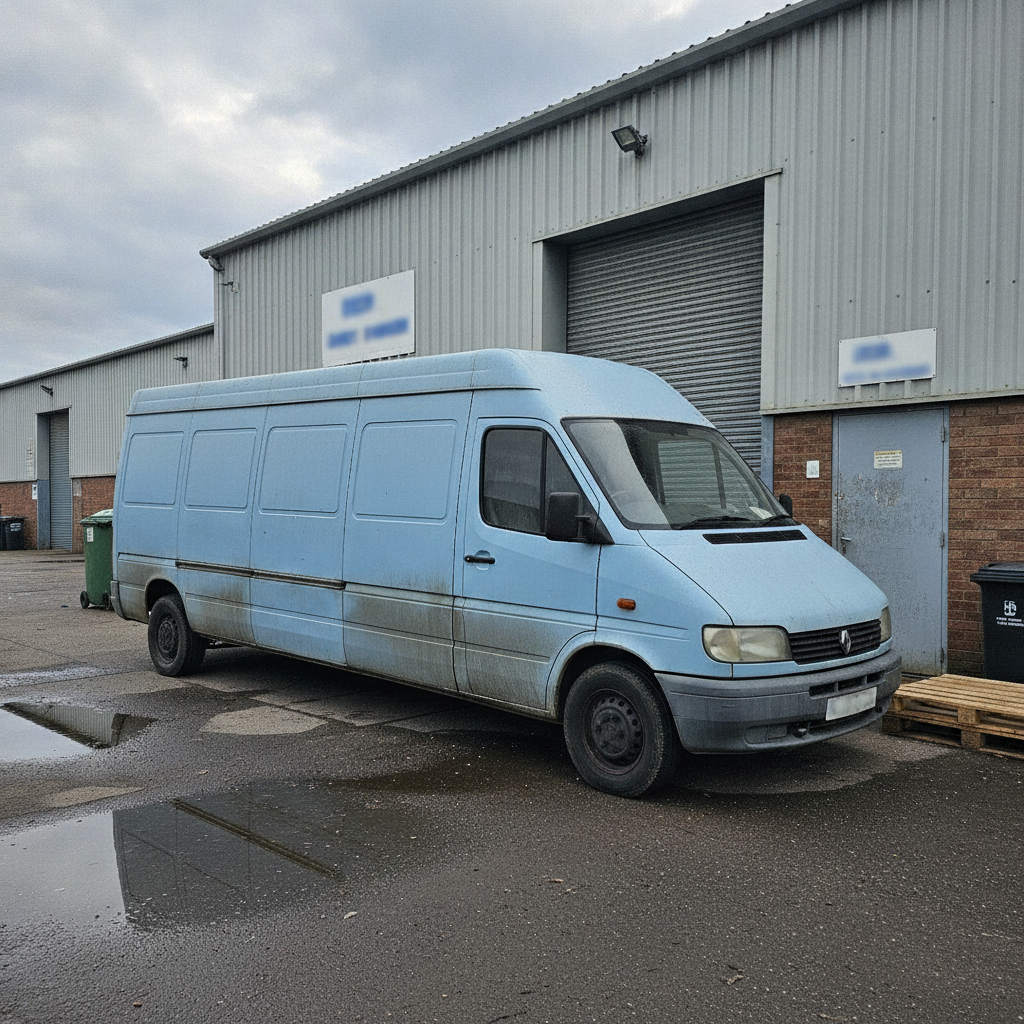
In this lower entry-level price tier, you will generally find older, high-mileage workhorses, typically with total recorded mileages well over one hundred and fifty thousand miles. The majority of vehicles in this price bracket date from before the introduction of widespread Euro 6 compliance standards, meaning they are Euro 5 diesel models that will incur daily emissions charges if driven inside the London Ultra Low Emission Zone (ULEZ) or regional Clean Air Zones (CAZ) across the UK. Vehicles at this price level often exhibit noticeable trade cosmetic wear, faded paintwork, internal cargo ply lining damage, and missing trim components. When browsing options at the bottom of the market, shift your primary focus away from minor cosmetic blemishes and concentrate strictly on structural chassis rust, mechanical drivetrain health, and a verifiable history of oil and filter maintenance. Factor a financial contingency reserve into your budget to immediately address deferred repairs such as worn braking friction material, leaking shock absorbers, or aged commercial tyres.
Used LWB Van Budgets: £8,000 to £16,000
This mid-level price category represents the most popular buying zone for independent tradespeople and expanding small businesses. In this bracket, you can expect clean, dependable work vehicles that typically fall between four and eight years of age, with odometer readings ranging between sixty thousand and one hundred and twenty thousand miles. Crucially, the vast majority of vans in this price spectrum feature Euro 6 diesel powertrains, ensuring that your commercial vehicle can enter low-emission zones throughout England and Scotland without paying non-compliance penalties. Many of these vehicles originate from well-managed corporate leasing fleets or national utility companies, meaning they often come with detailed digital service logs, documented preventative maintenance, and timely safety inspection records. While you should still expect standard cosmetic scuffs and signs of light trade use inside the cargo bay, the core mechanical components, gearboxes, and structural underpinnings should be in sound operating condition.
Used LWB Van Budgets: £16,000 to £25,000+
At the upper end of the pre-owned commercial vehicle market, buyers have access to late-plate, low-mileage examples, typically up to four years old with fewer than fifty thousand miles recorded. Vans in this tier often retain the balance of their original manufacturer warranties and are usually sold in exceptionally clean cosmetic condition. This price bracket is where you will find premium-specification Mercedes-Benz Sprinters and Volkswagen Crafters equipped with refined automatic transmissions, high-output engines, satellite navigation infotainment systems, reverse parking cameras, and advanced driver assistance systems. This price tier also contains ready-to-work specialist vehicles, such as those fitted with certified internal workshop racking, power inverters, roof-mounted beacons, or rear hydraulic loading tail lifts. For campervan converters, this bracket provides clean, unmolested base metalwork with straight factory panels, providing a strong platform for an interior living conversion.
Financing a Used Long Wheelbase Van
When upgrading or replacing an essential business asset, funding the purchase requires an evaluation of your cash flow, tax accounting method, and company balance sheet structure. Commercial vehicle acquisition generally divides across three conventional funding pathways:
- Hire Purchase (HP): With Hire Purchase, the business pays an initial deposit followed by fixed regular payments over a term typically spanning between two and five years. Once all scheduled payments and any modest documentation option fees are completed, full legal ownership of the vehicle passes to your business. This method suits companies that intend to keep their van indefinitely and write down the vehicle's capital depreciation against their annual taxable trading profits.
- Finance Lease: Highly popular among VAT-registered businesses, a Finance Lease allows you to operate the vehicle without taking technical ownership. Instead, you pay fixed rental charges over an agreed term. A key cash flow advantage is that the VAT due on the vehicle is spread across the monthly rental repayments rather than having to be funded upfront in one single transaction. At the end of the term, the vehicle is sold to an independent third party, with the majority of the sale proceeds returned to your business as a rebate of rentals, provided the van has retained its projected market value.
- Outright Capital Purchase: Buying clear with operational cash reserves avoids regular interest charges and allows you to modify the vehicle, ply-line the walls, or wrap the bodywork in commercial signage without needing external permissions. However, parting with a large lump sum can drain vital working capital that might be better deployed buying materials, covering sub-contractor costs, or buffering against seasonal trade slowdowns.
To evaluate these payment options and determine which commercial repayment profile aligns with your operating margins, you can read more about van finance options through independent financial providers or supplying motor dealerships. Always consult your qualified business accountant or tax adviser to determine the precise capital allowance deductions and VAT reclaim mechanisms appropriate to your sole trader or limited company trading structure.
Final Buying Checklist
Before transferring funds or signing a delivery acceptance form, carry out these final administrative checks:
- Verify the V5C Logbook: Check that the vehicle identification number (VIN) stamped into the metal chassis rail or visible through the front windscreen lower corner precisely matches the registration document. Confirm the engine number, registered fuel type, and official taxation class.
- Check MOT History Online: Use the free government online MOT checking service to review every historical test record. Pay particular attention to recurring advisory notices regarding structural corrosion, steering linkage play, or exhaust smoke opacity readings that were repeatedly ignored between test intervals.
- Confirm VAT Treatment: Most commercial van listings in the trade market display prices excluding value-added tax. If you operate as a non-VAT-registered sole trader, you must remember that an additional twenty percent will be added to the final invoice, directly increasing your total out-of-pocket capital cost.
- Commission a Full Provenance Check: Use an independent vehicle data check service to confirm that the van has no outstanding finance agreements, has never been written off by an insurance company under an insurance category register, and has not been reported as stolen.
Disclaimer: Vansales is an independent online vehicle information platform and listing marketplace. Vansales is not a finance broker, direct credit lender, or commercial motor retailer. This buying guide is published exclusively for general educational and informational purposes and does not constitute formal financial, mechanical, or legal advice. Commercial vehicle prices, mechanical specifications, and financing terms vary significantly based on vehicle age, mileage, lender criteria, and prevailing market dynamics. Always conduct an independent vehicle inspection and seek professional advice before entering into any binding purchase or credit agreement.